Carropool is a mobile app designed to help parents discover safe, reliable carpools for school drop-offs and pick-ups.
Role
Product designer
Strategy
Researcher
Timeline
Jun 2024 - Feb 2025
Tools
Figma, AI (Claude, Cursor)
OVERVIEW
Carropool explores how design can reduce friction and build trust in a routine that many families find stressful. This personal project reimagines what carpooling could look like if parents had a way to safely find, evaluate, and join carpools with confidence.
MY ROLE
End-to-end product designer: research, strategy, UX, UI, prototyping, product thinking.
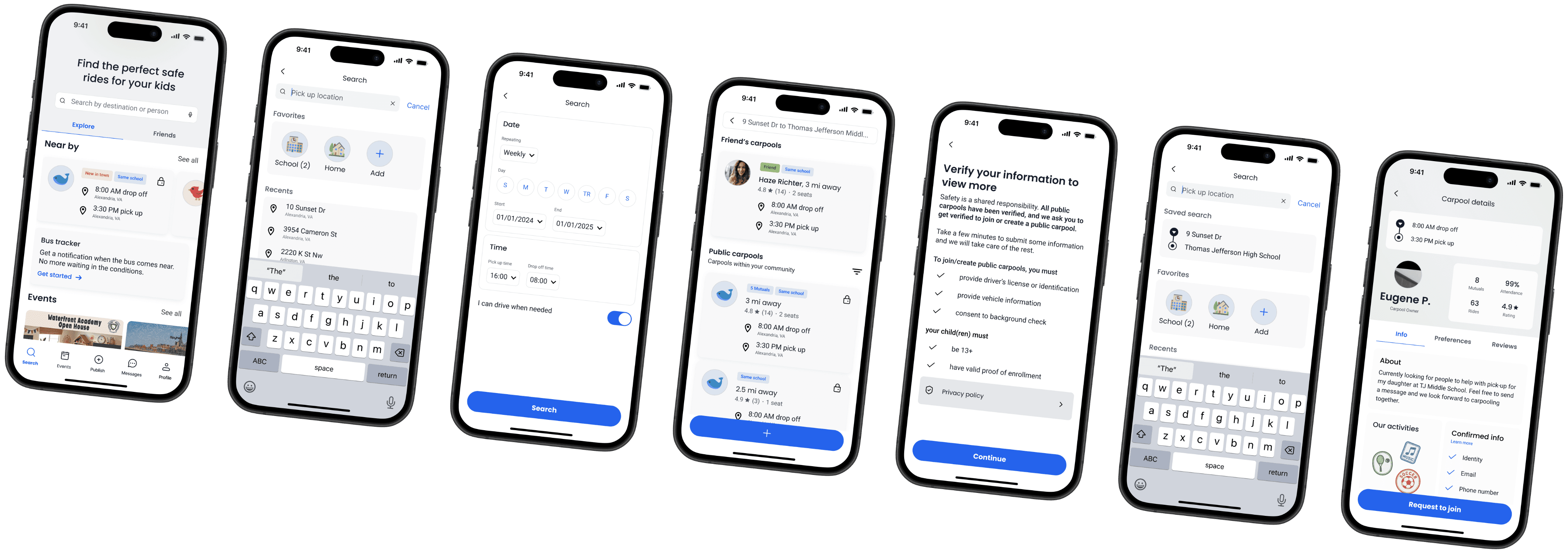
Final Design
CONTEXT
"Exhausted, Burned Out and Perpetually Behind"
Many parents in my community struggled with school pick-up and drop-off. It's chaotic, rushed, and sometimes undoable. Carpooling could help, but finding people to trust with your child is extremely difficult, especially outside your immediate circle.
I wanted to explore how thoughtful product design could increase trust within the larger community to support parents, and to allow more kids to participate in after school activities.
52% of parents with kids under 18 find the pick up/drop off processes frustrating.
OPPORTUNITY AND GAP
Why Carpool?
A staggering 79% of families manage school transportation independently, making carpooling the most practical and scalable option outside of relying on spouses or extended family. As I explored this space, carpooling emerged as a natural opportunity for a couple reasons:
01
Carpooling Already Exists
Many parents already carpool informally, and a few apps exist to support this. Could more families be doing it?



02
Shared and Sustainable Value
Unlike paid alternatives (like Uber for kids), parents and kids build valuable social connections with others that last. Schools benefit from reduced congestion, and community sees measurable reduction in emissions.

RESERARCH & INSIGHTS
I wanted to understand the underlying reason why more parents aren't carpooling their kids. So my initial research aimed to answer these questions:
What pain points exist in carpooling kids?
What has others done to help? Are there gaps?
Secondary Research
Analyzed 20+ articles and parent discussions using thematic coding.
The biggest barriers surfaced were safety and trust concerns, limited awareness or structure to help families form carpools, and the heavy coordination and mental load required to keep them running.
User Interviews
Conducted interviews with 10 parents, focusing on pain points of pick-up/drop-off and current routines.
Results showed that parents find carpools difficult to find within their network, and that they don't trust strangers.
Competitive Analysis
Analyzed 3 competitors (GoKid, Carpool Kids, and Tribe) to identify opportunities.
Research showed strong tools for managing established carpools, but poor adoption in apps where parents must connect with unfamiliar families, the highest-friction part the current market doesn’t solve.
Through research, I identified two major parent groups:
Double-income, educated working parents with limited time but relatively established networks
Disadvantaged working parents with even less time, fewer resources, and smaller support networks
Background
Emily is a Marketing Manager with a demanding full-time job. She lives with her husband, who also works full time, and her two children. She has many parent friends.
Frustrations
Work-Life Balance: Struggles to balance a demanding job with childcare, often impacting her career.
Inconsistent Help: Family and friends aren’t always available for pick-ups.
Safety Concerns: Hesitant to trust strangers with her children's safety.
Goals
Save Time: Avoid leaving work early for pick-ups.
Ensure Safety: Find a trustworthy, safe carpooling solution.
Ease of Use: Use convenient, reliable solutions that fit her routine.
“I would need to be more than 100% certain that it’s safe and trustworthy.”

Double-income, working parent persona
Background
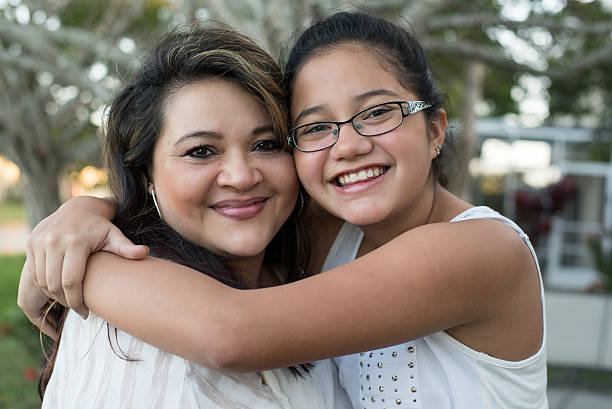
Maria is a single mother working long hours to support her two children. She lives in a low-income neighborhood.
Frustrations
Limited Support: Lack of reliable access to transportation or social network to find help.
Time Constraints: Long work hours leave little time to be involved in her kids' academics. Her children are not able to participate in extracurriculars.
Technology/Language Barriers
Goals
Simple Solutions: Find an easy-to-use, tech-friendly carpooling option.
Increased Involvement: Ensure her children can participate in extracurricular activities.
Safety and Communication: Use a trustworthy carpooling service with clear communication about her children’s transportation.
“I can’t always be there for them, but I’m always trying to give them the best.”
Disadvantaged parent persona
For the first version of Carropool, I prioritized the double-income, educated parents, not because they need it more, but because they’re more likely to:
Create the first wave of carpools
Generate verification signals and reviews
Establish network density
Make the platform trustworthy enough for others to join
How the other persona informs design
DESIGN QUESTION
How might we create a carpool discovery experience that parents trust and can act on with minimal friction?
IDEATION FROM INSIGHTS
Scope and Framework
I prioritized the search and join functionality as this is the one feature that do not exist in any other apps in this context.
To focus on this core value of discovery with trust, I intentionally scoped out features for during and after the ride.
Before the ride
Login/sign up
Verify information
Coordinate
Search for carpool
Request to join
Confirm carpool
Arrive at pick up
Drop off
Confirm riders
Rate and review
Confirm drop off
Report a problem
I also prioritized area-wide search beyond a single school after looking at current products and opportunity space through competitive analysis. This would expand the pool for search and allow more parents to connect with each other.
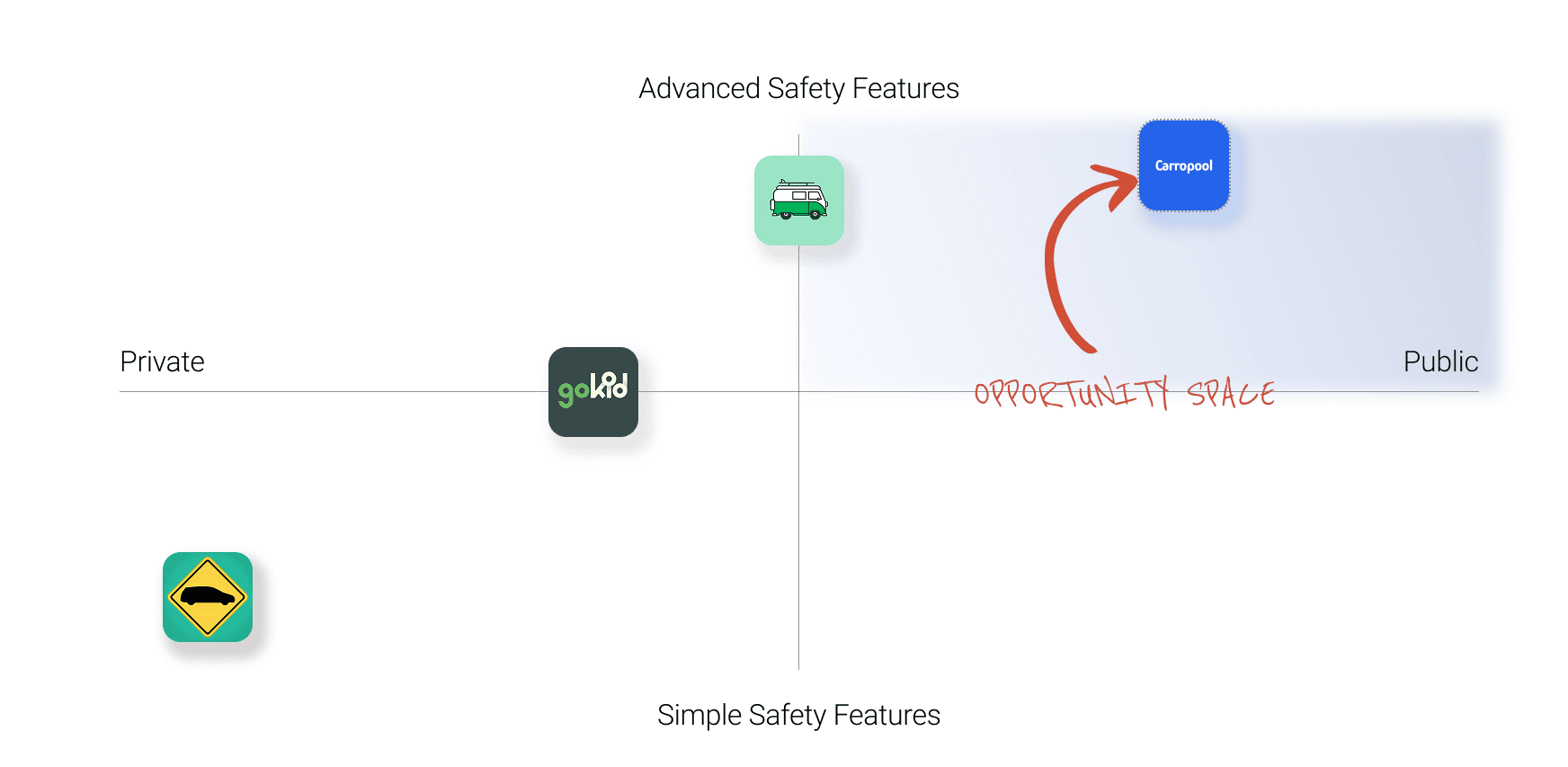
Organize carpool groups with people you know
Do not offer search and join features.
Safe - only carpool with people you invite.
Search and join within a school
Limits search to single school search instead of area-wide.
Safe-ish - parents use school code to log in/verify identity.
Search and join anywhere
Area-wide search, for any school or event.
Safe - carpool with people you know or with parents in your community with safety measures.
User Segmentation
DESIGN STRATEGY
Design Principles
Based on research insights, I developed three design principles to guide the direction of the search and join features, as designing for parents and children can be highly sensitive
Security
Identity visibility, verification, reviews, transparency.
Connectivity+ Familiarity
Encourage discovery and connection through existing network
Simplicity
Reduce friction and help parents get to next steps quickly and simply.
PROTOTYPING & VALIDATION
Challenge 1: Hard to Discover Reliable Partners
#security
#connectivity
#familiarity
#community
Insight: people rely on and trust one another when it comes to sharing information.
Solution: leverage existing networks and common interests, we can help connect parents and foster greater trust with area wide search —> expands potential matching pool.
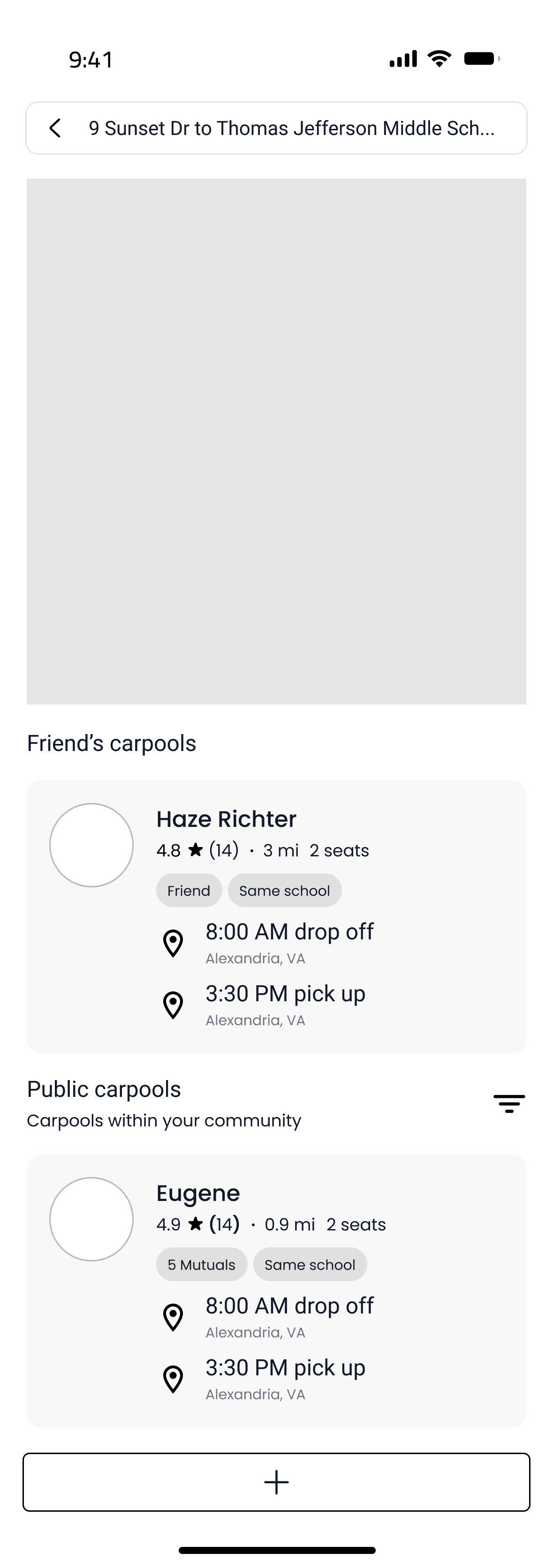
Utilizing existing network
to expand search
through on-boarding
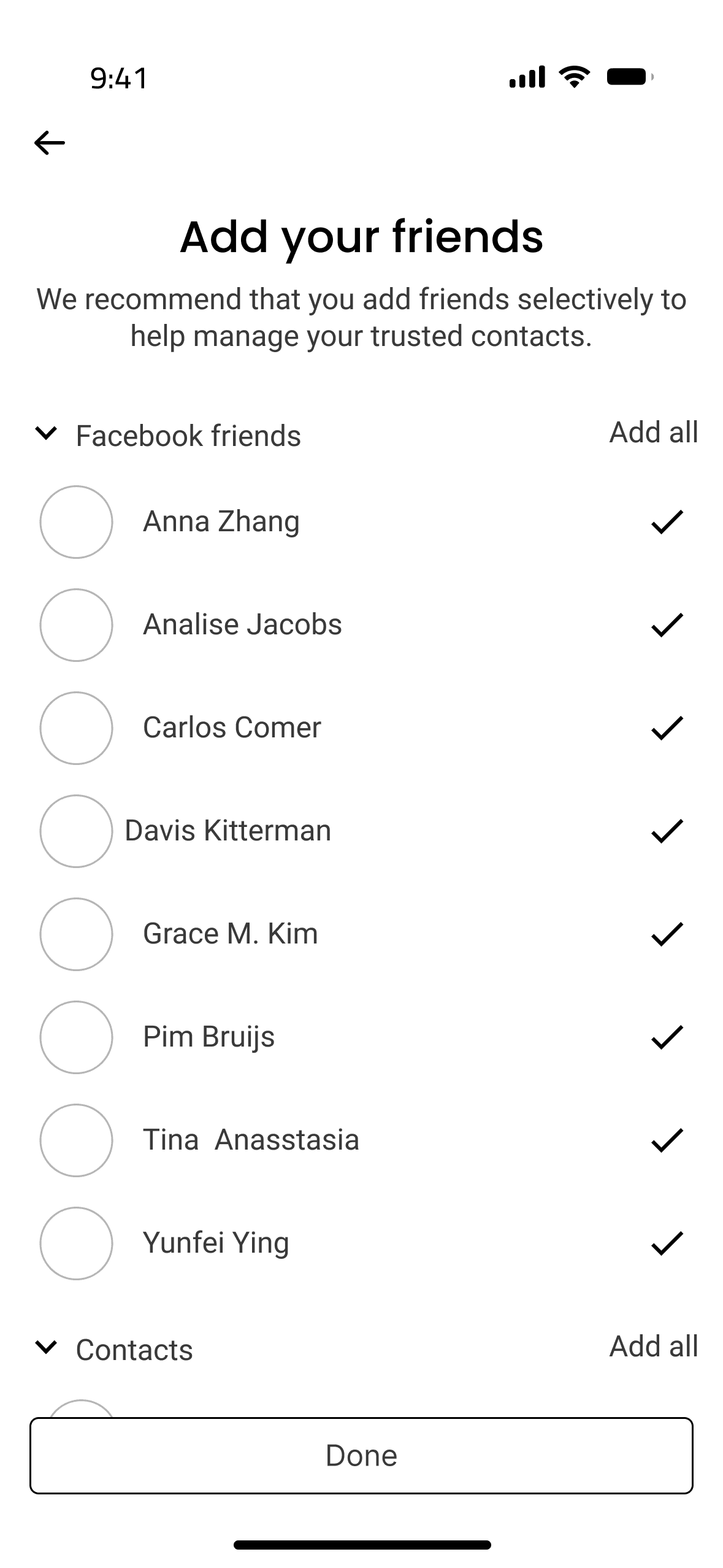
Hierarchy within carpools:
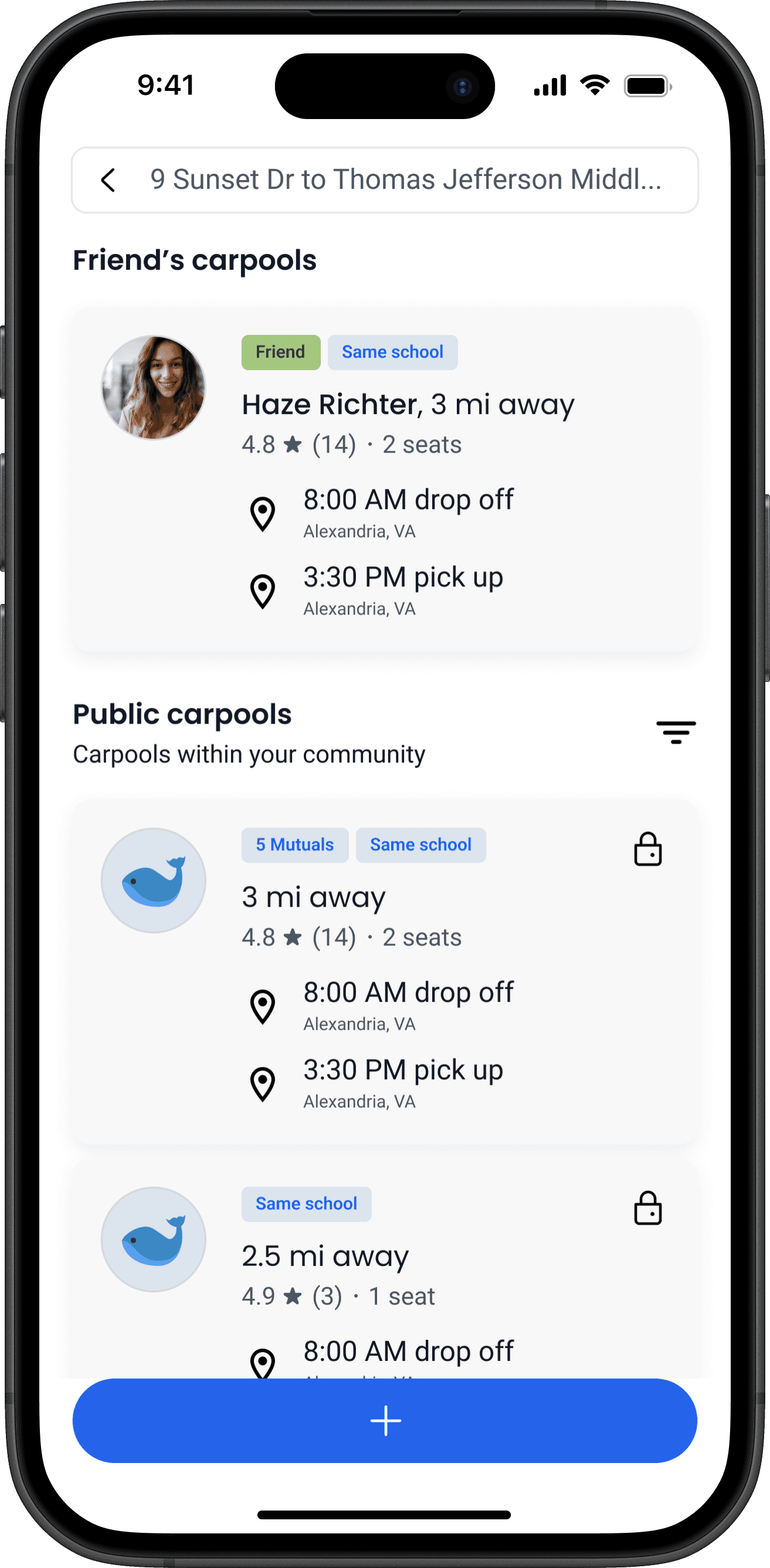
friends shown at top
Tags help identify similarities
and shared communities
Challenge 2: Low Trust
#security
Insight: high emotional stakes with children
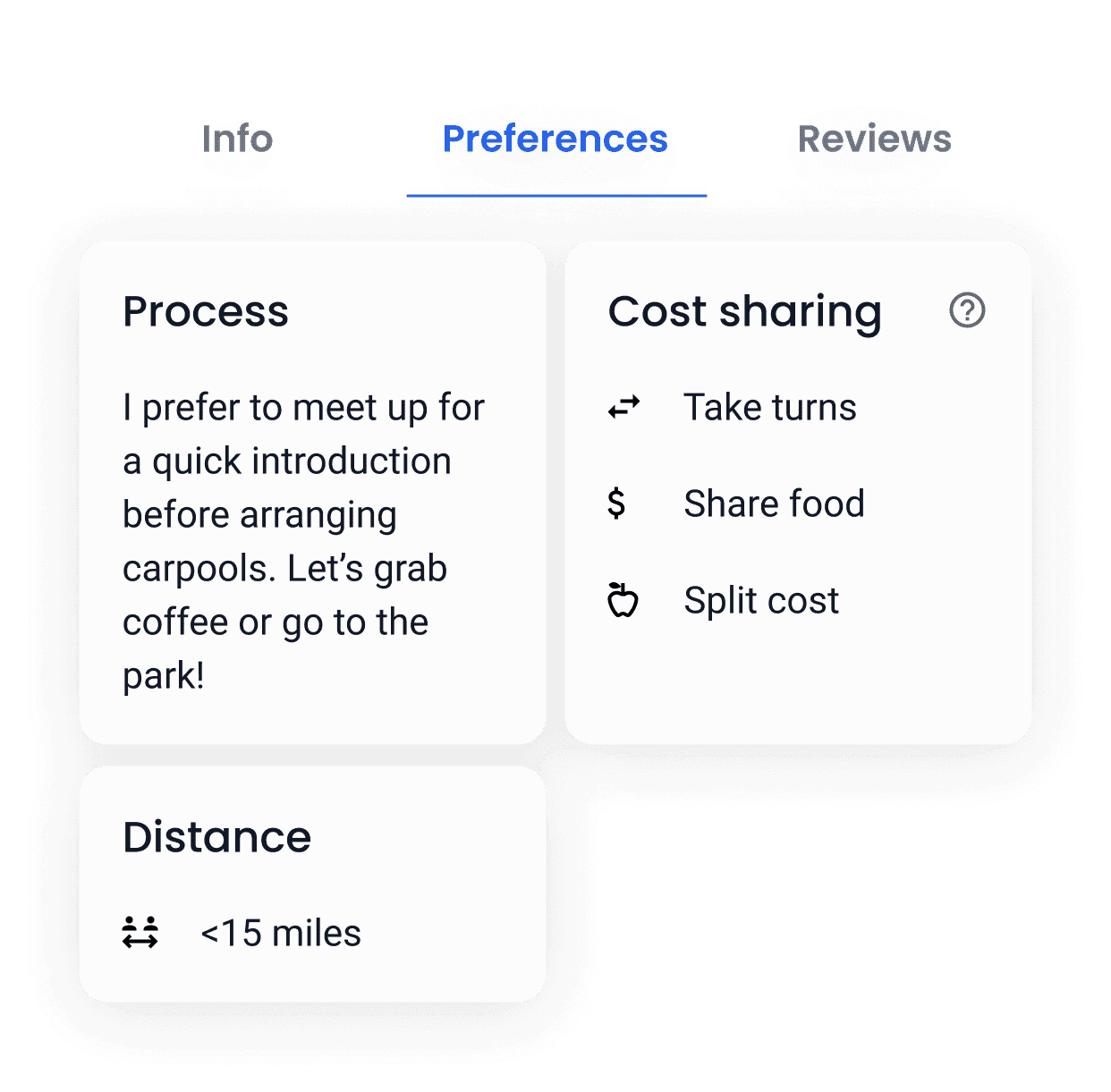
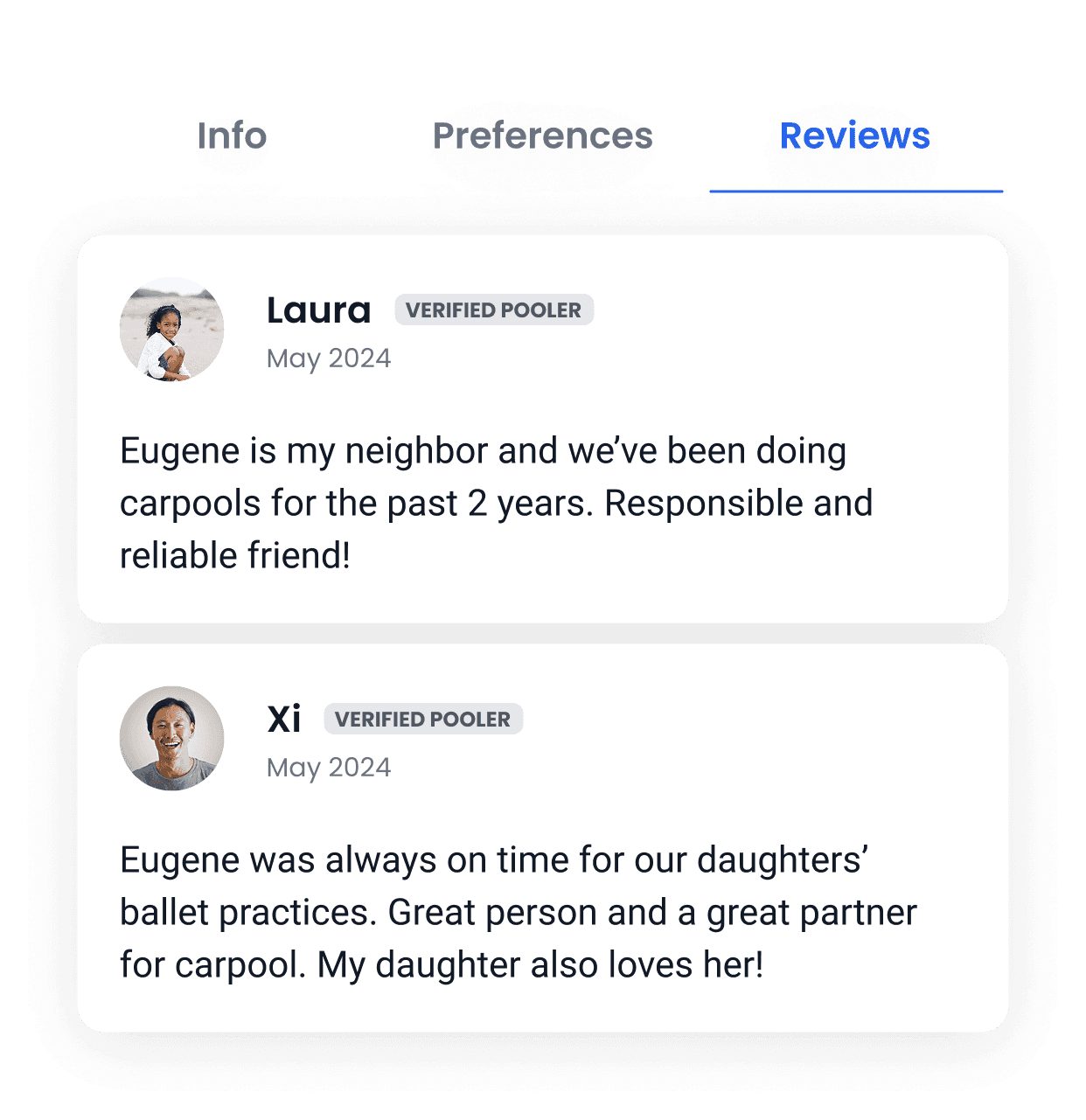
Solution: Verifications, ratings, mutuals to establish credibility quickly.


Challenge 3: Balancing Security With Friction
#security
#simplicity
#value first
#progressive disclosure
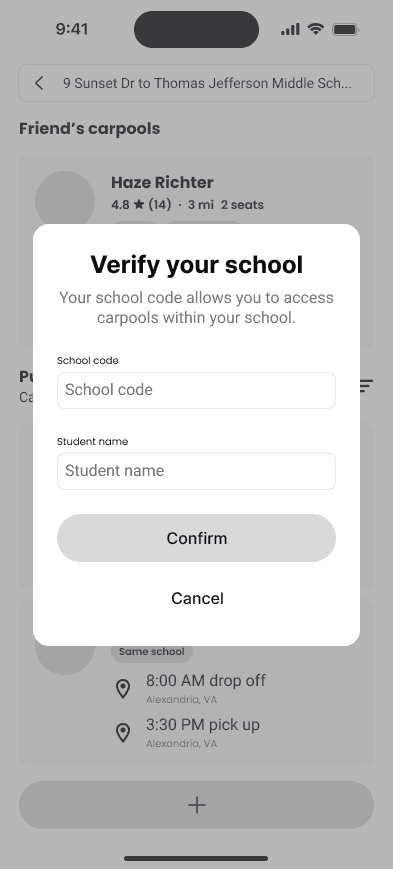
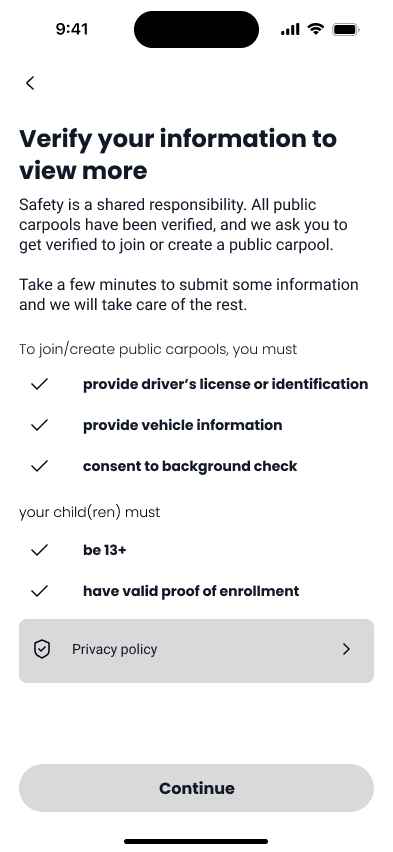
Insight: heavy upfront verification require users to give up data which causes drop off
Solution: users can browse carpools and review key details first, and only complete identity verification when they’re ready to join a group, leading to more motivated, lower-friction conversions.
On-boarding
Account creation
Personalization
Identity verification
Search and Join
Search parameters
View search results
Review details
Request to join
Identity verification
HI-FIDELITY PROTOTYPE
Onboarding
The experience starts by establishing trust:
Value before friction
Clear explanation of how safety works
Asking for verification only after parents see the benefit


HI-FIDELITY PROTOTYPE
Search and verify
Parents tailor the experience with:
Schedule
Distance radius
Preferences
Ensure safety with:
Private profiles
Comprehensive verification
HI-FIDELITY PROTOTYPE
Search and join
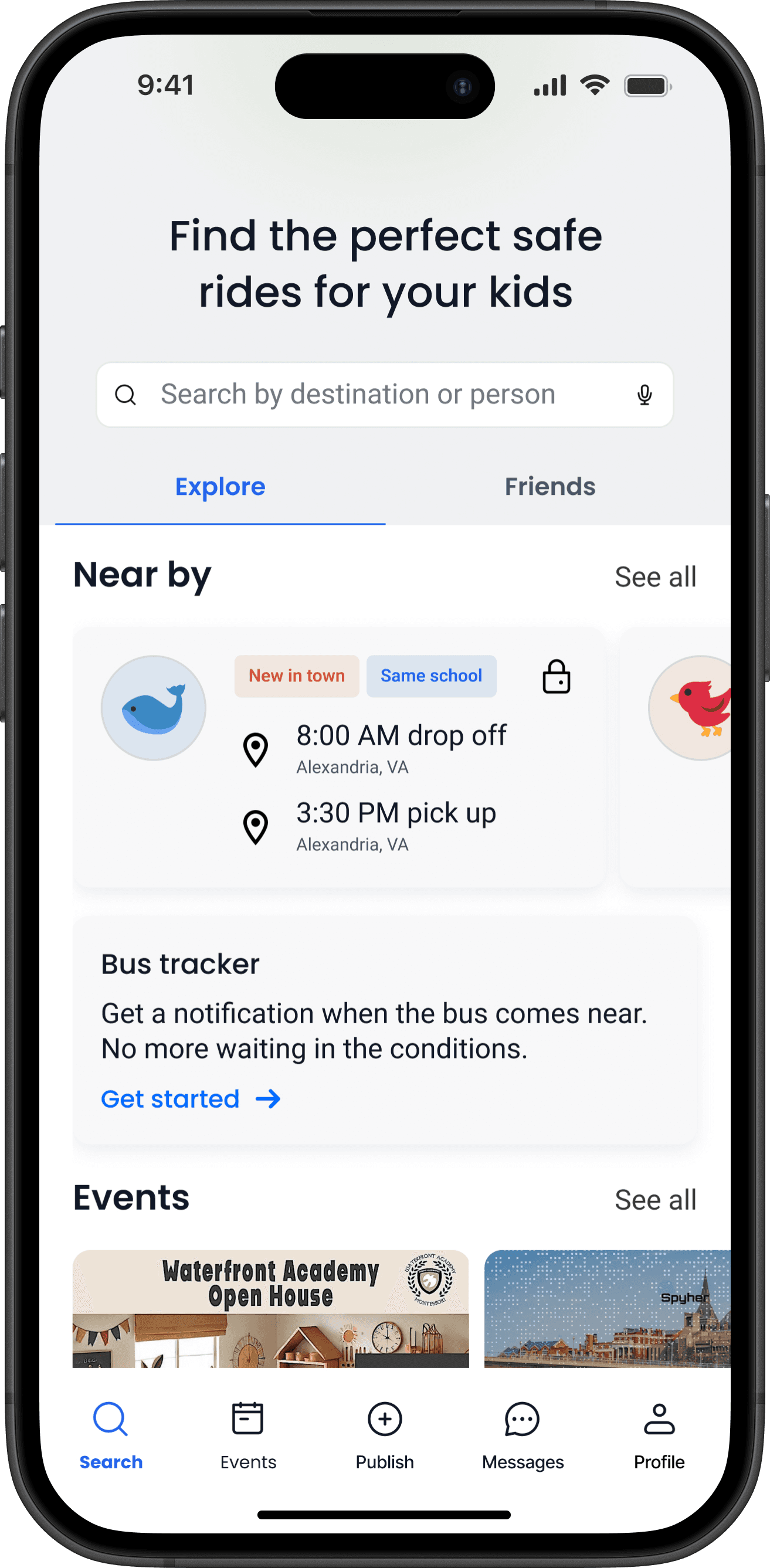
Search cards highlight the most valuable information first:
Driver identity
Verification status
Ratings & reviews
Distance & timing
Mutual networks
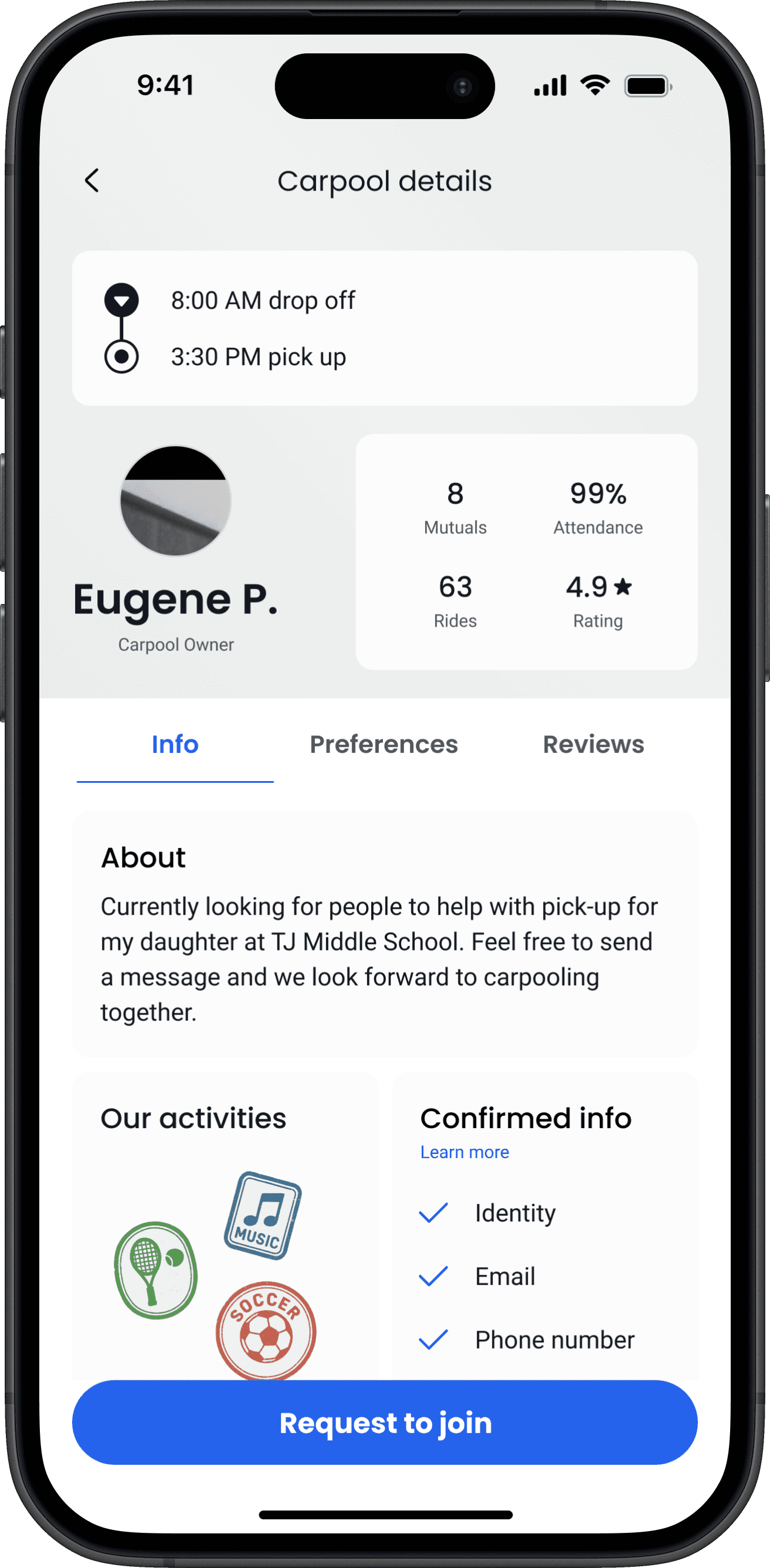
Profiles include:
Verified identity
Parent reviews
Behavior expectations
These reduce anxiety and enable quicker decisions.

FINAL CONSIDERATIONS
Reflection
Safety was the most complex challenge due to the unpredictability of human behavior, especially with children involved. Inspired by data-driven safety research from companies like Uber, I tried to implement preventative and trust-building measures that guide parents, with just the right amount of friction.
This project strengthened my ability to design for high-emotion, high-stakes scenarios: balancing clarity, trust, and business viability. It also taught me to prioritize ruthlessly and cut non-essential features to focus on the MVP.
Value to Business and Success Metrics
Revenue models that align with the product's purpose and user experience:
Freemium - basic features are free. However, parents who need advanced features - such as managing multiple carpools, setting custom schedules with linked calendars, etc. - would upgrade to a subscription plan.
Advertising - for local community events and family-oriented businesses curated for our parents/kids. Having contextual ads is another way to strengthen the community and reinforce value add to parents.
REACH OUT
2025 Yuxin Ren